The Earth flyby anomaly
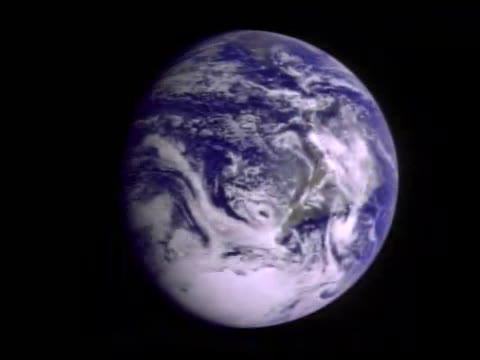
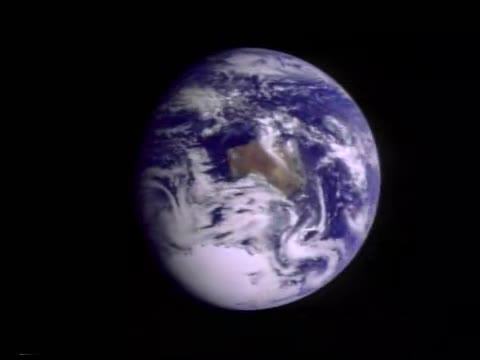
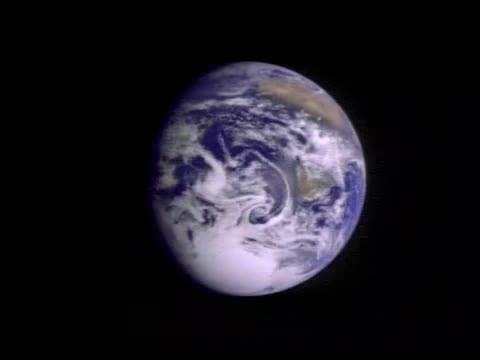
A gravity assist uses a planet's motion to change a spacecraft's speed. Navigators predict the outgoing trajectory from the incoming one with models of the planet's gravity field, atmosphere, tides, the Moon, the Sun and relativity, and track the spacecraft with radio Doppler and ranging precise enough to measure speed changes of hundredths of a millimetre per second[1][2]. In December 1990, after Galileo's first Earth flyby, JPL's navigators found that the trajectories before and after perigee could not be fitted together: the spacecraft had left about 3.9 mm/s faster than the model allowed[1]. NEAR's flyby in January 1998 showed 13.46 mm/s, the largest such change recorded[1][3].
Over the next decade the anomaly appeared, in different sizes and signs, at Cassini's flyby in 1999 and Rosetta's first in 2005, and was absent at MESSENGER's in 2005[1]. In 2008 John Anderson and colleagues showed that the six measured cases fitted a simple formula: the change is proportional to the spacecraft's speed and to the difference of the cosines of its incoming and outgoing declinations, with a constant equal to twice the speed of Earth's equator divided by the speed of light[4]. The form suggests an effect tied to Earth's rotation, but no known physics produces it.
The formula then failed. Rosetta's flybys of 2007 and 2009 and Juno's in October 2013, which ESA tracked specifically to test the anomaly, showed no anomaly where the formula predicted one[2][5]. Explanations have since divided between something missing from the navigation models and new physics, and none has been accepted. The early anomalies can be re-tested only from the original tracking data. Reconstructed trajectories and some radio-science data are public, but the tracking around most of the anomalous perigees has not been released as open data sets[6][7], and Turyshev and Toth warned that such data must be preserved for any re-analysis[1]. Of the 4 questions on this site, 0 are answered. The most likely answer to “What produces the velocity changes seen in some Earth flybys?”, not yet confirmed: an error or inconsistency in trajectory modelling and navigation software (reference frames, spheres of….
Key questionsset by the editors
What happened
Galileo passed Earth at 960 km on 8 December 1990 and gained 3.92 ± 0.08 mm/s more than predicted. Its second flyby, on 8 December 1992, went to 303 km, through the thermosphere: the total residual was about −8 mm/s, of which about −3.4 mm/s was attributed to atmospheric drag, leaving −4.6 mm/s unexplained[1][2]. NEAR passed at 539 km on 23 January 1998 with +13.46 mm/s[1]. Antreasian and Guinn re-analysed all three with the best gravity field of 1998 and presented the results that year[3].
 0:02
 0:02
 0:11
 0:20
Cassini passed at 1,175 km on 18 August 1999; thruster firings masked the anomaly at first, and later analysis gave 2 ± 1 mm/s in magnitude (listed as −2 mm/s in later tables)[1][2]. Rosetta passed at 1,956 km on 4 March 2005 with +1.80 ± 0.03 mm/s, measured by ESA's navigators; MESSENGER passed at 2,347 km on 2 August 2005 with no significant change[1]. Anderson's formula predicted an increase of under 1 mm/s for Rosetta's second flyby on 13 November 2007[4]; none was seen then or at the third, on 13 November 2009[2][5]. Juno passed at 559 km on 9 October 2013; the Anderson formula predicted about +6 mm/s and an alternative formula about −7 mm/s[8], while standard physics predicted none[9]. The result was at the threshold of detection or absent[10].
Timeline
The accounts
The accounts are those of the navigation teams. JPL's analysis of Galileo and NEAR is the first[3]; the 2008 paper by Anderson and colleagues at JPL is the standard summary[4]. ESA's flight dynamics team at ESOC measured the Rosetta anomaly in 2005 and found none in the later flybys; its expert Trevor Morley called it "a real cosmic mystery" in 2013[5]. Turyshev and Toth, who led the re-analysis of the Pioneer anomaly, reviewed the evidence in 2009 and argued that the modelling must be audited before new physics is considered[1]. Other reviews place it among the claimed gravitational and navigation anomalies in the Solar System[11][12].
What was recorded
Each anomaly is a number derived from a fit: tracking data (two-way Doppler and ranging from the Deep Space Network or ESA stations) before and after perigee are fitted with a trajectory model, and the anomaly is the velocity change at perigee needed to reconcile them[1]. The published values, with the flybys' altitudes, inclinations, perigee latitudes and asymptotic speeds, are tabulated for nine flybys in a 2017 analysis[2]. The tracking itself is the record that matters, and most of it is not public. NAIF distributes reconstructed trajectories for many missions, but its Galileo files begin in 1995, after both Earth flybys[6]. ESA's archive of Rosetta radio-science data holds two data sets from the second Earth swing-by phase; the one opened in this research is a checkout a month before the flyby[7]. Turyshev and Toth noted that older DSN data deposited by radio science teams can be retrieved from NASA's NSSDC, and urged that tracking and engineering telemetry be preserved[1].
The explanations
Conventional physics has been tested piece by piece. The Moon, the Sun and relativistic effects were dismissed by the first analysts[3]; atmosphere, tides, spacecraft charge and magnetic moment, Earth-albedo radiation pressure, solar wind and spin-rotation coupling were judged too small[13]. General relativity's gravito-magnetic and gravito-electric effects change NEAR's speed by 10⁻⁵ to 10⁻² mm/s, a thousand to a million times too little[14]. Thermal recoil forces and Lorentz forces on a charged spacecraft have each been modelled in detail[15][16]. None has explained the pattern.
Modelling and software are the explanation the navigation reviewers put first. Turyshev and Toth pointed to the handling of reference frames and spheres of influence in navigation codes, and to inconsistent definitions of Earth-orientation and tidal quantities between frames[1]. Busack noted that his formula, which predicted the Rosetta null results, supports the idea of an error in older measuring software[8]. This reading predicts that re-processing the early tracking data with a modern, consistent model would shrink the anomalies.
New physics proposals include a modification of inertia, which reproduces three of the six early values within error[17]; dark matter bound to Earth, which needs implausible densities and properties[18]; an unknown latitude-dependent force of about 300 km range[2]; and a 2026 treatment within a variational formulation of general relativity[19]. A 2026 preprint proposes that the distribution of land and sea under the trajectory modulates the effect[20]. Each must explain the null results as well as the early anomalies, and the empirical formulas proposed so far have failed to predict new flybys[2].
Published claims
| Year | Who | Claimed | Status | Reason |
|---|---|---|---|---|
| 1998 | Peter Antreasian and Joseph Guinn (JPL)[3] | Galileo in 1990 and NEAR in 1998 left Earth several millimetres per second faster than the best models allowed, and the Moon, the Sun and relativity do not account for it. | Accepted | Later JPL and ESA analyses found the same kind of residuals, though whether they reflect physics or modelling is still open[4][1]. |
| 2008 | John D. Anderson and colleagues[4] | The six measured anomalies fit one formula: proportional to the spacecraft's speed and the change in the cosine of its declination, with a constant of twice Earth's equatorial speed over the speed of light. | Ruled out | Its predictions failed for Rosetta in 2007 and 2009 and for Juno in 2013, which showed no clear anomaly where it predicted one[2][10][5]. |
| 2008 | Claus Lämmerzahl, Oliver Preuss and Hansjörg Dittus[13] | Atmosphere, tides, spacecraft charge and magnetic moment, Earth albedo, solar wind and spin-rotation coupling are each too small to cause the anomalies. | Accepted | Later detailed models of thermal recoil and Lorentz forces reached the same conclusion for those forces[15][16]. |
| 2008 | M. E. McCulloch[17] | A modification of inertia that depends on acceleration relative to the rotating Earth produces the flyby anomalies. | Disputed | It reproduced three of the six early values within error and missed the others by 1 to 3 mm/s, and has not been tested against the null flybys[17][2]. |
| 2009 | Stephen L. Adler[18] | Scattering off dark matter bound to Earth could produce the anomalies. | Disputed | Adler's own analysis shows it needs densities many orders of magnitude above the galactic halo and unusual dark matter properties[18]. |
| 2009 | Lorenzo Iorio[14] | General relativity's gravito-electric and gravito-magnetic effects change NEAR's speed by only 10⁻⁵ to 10⁻² mm/s, far too little to explain the anomaly. | Accepted | A calculation from standard theory that no later work has disputed; it rules out standard relativity, not new physics[9]. |
| 2009 | Slava G. Turyshev and Viktor T. Toth[1] | The anomaly most likely comes from inconsistencies in navigation modelling, such as reference frames, spheres of influence and Earth-orientation and tidal definitions, which must be audited before new physics is considered. | Most likely | Later flybys processed with newer software show no anomaly, but no uniform re-analysis of the early tracking has been published[2][8]. |
| 2010 | Justin A. Atchison, Mason A. Peck and Brett J. Streetman[16] | Lorentz forces on an electrically charged spacecraft cannot reproduce NEAR's anomaly and are unlikely to be its cause. | Accepted | Their optimisation found no Lorentz-force history that fits all six orbital states, and no later work has revived the idea[16]. |
| 2011 | B. Rievers and C. Lämmerzahl[15] | Thermal recoil pressure is not the cause of Rosetta's flyby anomaly, though it likely explains the Pioneer anomaly. | Accepted | A detailed thermal model of the spacecraft; no other study has found a thermal force large enough at Earth flybys[15]. |
| 2013 | Hans-Jürgen Busack[8] | An alternative empirical formula, which predicted the Rosetta null results, gives about −7 mm/s for Juno's 2013 flyby. | Disputed | Juno's anomaly was at the threshold of detection or absent, not the predicted −7 mm/s[10]. |
| 2013 | ESA (Trevor Morley, ESOC flight dynamics)[5] | Rosetta's 2007 and 2009 flybys showed no anomaly, and the effect remains unexplained. | Accepted | The null results are part of every later tabulation of the flybys[2]. |
| 2014 | Lorenzo Iorio[9] | Standard physics predicts no measurable anomaly for Juno's 2013 Earth flyby. | Accepted | Juno's anomaly was at the threshold of detection or absent[10]. |
| 2017 | L. Acedo[2] | A latitude-dependent force of about 300 km range, acting near low perigees, accounts for the pattern of anomalies and nulls across nine flybys. | Still possible | A fit to the published values that predicts non-zero anomalies only for three flybys; no new flyby has tested it[2]. |
| 2018 | L. Acedo, P. Piqueras and J. A. Moraño[10] | Juno's perijoves at Jupiter show an anomalous acceleration of a few mm/s² that may be an analogue of the Earth flyby anomaly. | Still possible | Drawn from published data rather than the gravity-science team's own fits, and not confirmed by them[10]. |
| 2026 | Shubhen Biswas[19] | The flyby anomaly can be derived within a variational formulation of general relativity. | Still possible | Published this year and not yet tested against the null flybys or other precision tests near Earth[19]. |
| 2026 | M. Fikret Yalcinbas[20] | The distribution of land and sea under a flyby's path modulates the sign of the anomaly. | Still possible | A preprint, not peer reviewed, fitted to the existing flybys only[20]. |
What would settle it
A uniform re-analysis of every Earth flyby from the original tracking data, by one team with one modern model of Earth's gravity, atmosphere, orientation and tides and with the spacecraft's thermal and attitude histories, would show whether the anomalies survive. That needs the raw Doppler and ranging files for each flyby, released with the engineering telemetry. A dedicated test, a spacecraft or satellite on a highly elliptical Earth orbit with precise tracking and an accelerometer, was proposed for this purpose[21]. Each future Earth flyby, tracked continuously through perigee and published with its residuals, adds a test of any formula.
Questions
0 of 4 questions are answered.
Evidence 17 findings
Artifacts
The films, photos, papers and objects this mystery rests on, each with its own key and its distance from the original.
See also
References
- 1.Turyshev, S., Toth, V. 2009. The Puzzle of the Flyby Anomaly. Space Science Reviews 148(1–4), 169–174.doicited 13 times hereSRC0CWYE07A1VKE
- 2.Acedo, L. 2017. The flyby anomaly: a multivariate analysis approach. Astrophysics and Space Science 362(2), 42.doicited 11 times hereSRC0CWYE16J6YDA
- 3.Antreasian, P., Guinn, J. 1998. Investigations into the unexpected Delta-V increases during the Earth gravity assists of Galileo and NEAR. AIAA/AAS Astrodynamics Specialist Conference and Exhibit, AIAA 98-4287.doicited 5 times hereSRC0CWYDZFW37Z1
- 4.Anderson, J., Campbell, J., Ekelund, J. et al. 2008. Anomalous Orbital-Energy Changes Observed during Spacecraft Flybys of Earth. Physical Review Letters 100(9), 091102.doicited 9 times hereSRC0CWYDZQP6RHF
- 5.European Space Agency 2013. ESA and NASA stumped by cosmic mystery. ESA Operations (esa.int), 9 October 2013.cited 4 times hereSRC0CWYE0PY4KEB
- 6.NASA Navigation and Ancillary Information Facility, J. 2026. NAIF SPICE data: mission kernels. NAIF, Jet Propulsion Laboratory.cited 2 times hereSRC0CWYE44A3AEZ
- 7.European Space Agency 2026. ESA Planetary Science Archive: Rosetta Radio Science Investigation (RSI). ESA Planetary Science Archive.cited 3 times hereSRC0CWYE4C429MN
- 8.Busack, H. 2013. Expected velocity anomaly for the Earth flyby of Juno spacecraft on October 9, 2013. arXiv.cited 3 times hereSRC0CWYE0YR11F9
- 9.Iorio, L. 2014. A flyby anomaly for Juno? Not from standard physics. Advances in Space Research 54(11), 2441–2445.doicited 1 time hereSRC0CWYE2DM6AHS
- 10.Acedo, L., Piqueras, P., Moraño, J. 2018. A possible flyby anomaly for Juno at Jupiter. Advances in Space Research 61(10), 2697–2706.doicited 6 times hereSRC0CWYE1EC5ADC
- 11.Nieto, M., Anderson, J. 2009. Earth flyby anomalies. Physics Today 62(10), 76–77.doicited 1 time hereSRC0CWYE0F46Y9C
- 12.Iorio, L. 2015. Gravitational anomalies in the solar system?. International Journal of Modern Physics D 24(6), 1530015.doicited 1 time hereSRC0CWYE3CW4FNE
- 13.Lämmerzahl, C., Preuss, O., Dittus, H. 2008. Is the Physics Within the Solar System Really Understood?. Lasers, Clocks and Drag-Free Control (Astrophysics and Space Science Library 349), Springer, 75–101.doicited 3 times hereSRC0CWYDZZG6T0N
- 14.Iorio, L. 2009. The Effect of General Relativity on Hyperbolic Orbits and Its Application to the Flyby Anomaly. Scholarly Research Exchange 2009, 807695.doicited 2 times hereSRC0CWYE25T261N
- 15.Rievers, B., Lämmerzahl, C. 2011. High precision thermal modeling of complex systems with application to the flyby and Pioneer anomaly. Annalen der Physik 523(6), 439–449.doicited 2 times hereSRC0CWYE1P620CC
- 16.Atchison, J., Peck, M., Streetman, B. 2010. Lorentz Accelerations in the Earth Flyby Anomaly. Journal of Guidance, Control, and Dynamics 33(4), 1115–1122.doicited 1 time hereSRC0CWYE1Y00M1B
- 17.McCulloch, M. 2008. Modelling the flyby anomalies using a modification of inertia. Monthly Notices of the Royal Astronomical Society: Letters 389(1), L57–L60.doicited 4 times hereSRC0CWYE2NE1TYK
- 18.Adler, S. 2009. Can the flyby anomaly be attributed to earth-bound dark matter?. Physical Review D 79(2), 023505.doicited 4 times hereSRC0CWYE2X841RN
- 19.Biswas, S. 2026. Flyby anomaly in the variational principle of general relativity. The European Physical Journal Plus 141(1), 72.doicited 3 times hereSRC0CWYE3MP62XM
- 20.Yalcinbas, M. 2026. A Sign-Stable Earth-Fixed Modulation in Earth Flyby Anomalies. Preprints.org.doicited 3 times hereSRC0CWYE3WG0ZVE
- 21.Páramos, J., Hechenblaikner, G. 2013. Probing the flyby anomaly with the future STE-QUEST mission. Planetary and Space Science 79–80, 76–81.doicited 1 time hereSRC0CWYE3526CNN