Phosphine in the clouds of Venus
Phosphine is a molecule of one phosphorus and three hydrogen atoms. On Earth it is made by anaerobic microbes and by industry; in the atmospheres of Jupiter and Saturn it is dredged up from hot, hydrogen-rich depths. Venus has neither condition: its clouds are concentrated sulphuric acid in an oxidising atmosphere, where any phosphorus should be bound to oxygen[1]. In September 2020 Jane Greaves and colleagues reported an absorption line at 266.94 GHz, the frequency of phosphine's lowest rotational transition, in spectra of Venus from the James Clerk Maxwell Telescope in Hawaii and the Atacama Large Millimeter/submillimeter Array in Chile. They inferred about 20 parts per billion and found no abiotic process that could make that much[1].
The claim drew re-analyses within weeks. Venus is very bright at these wavelengths, and a weak line has to be picked out from instrumental ripples in the spectrum's baseline. Snellen and colleagues showed that the polynomial used to flatten the ALMA baseline could create lines as strong as the claimed one at other frequencies, and found only a 2-sigma feature in their own reduction[2]. Thompson found no significant line in the JCMT data under bootstrap tests[3]. ALMA found that its standard calibration was unsuitable for so bright a target and re-processed the data[4]. Others argued the line was sulphur dioxide high in the atmosphere[5][6], and infrared and airborne searches set upper limits below the claim[7][8].
The detection team has kept finding the line: about 5 sigma and 1–4 ppb in the reprocessed ALMA data[9], consistent depths in 2017 and 2019 after correcting for sulphur dioxide[10], a reading of phosphine in 1978 Pioneer Venus mass spectra by another group[11], and new JCMT data from a monitoring programme begun in 2022[12][13]. Every remote detection so far comes from the original team; the independent searches with other instruments have reported upper limits[7][14][8]. The question has become one of method: how to separate a weak, broad line from instrumental ripple in the spectrum of a very bright planet. Of the 4 questions on this site, 0 are answered.
Key questionsset by the editors
What happened
The JCMT observations were made with the RxA3 receiver over five mornings in June 2017, under project S16BP007[1]. Seeing an absorption feature at the phosphine frequency, the team asked for Director's Discretionary Time on ALMA and observed Venus on 5 March 2019 with 44 antennas, under project 2018.A.00023.S, "Confirming Phosphine in the Atmosphere of Venus"[1][15]. The paper appeared on 14 September 2020 and reported detections of up to about 15 sigma and an abundance of about 20 ppb[1].
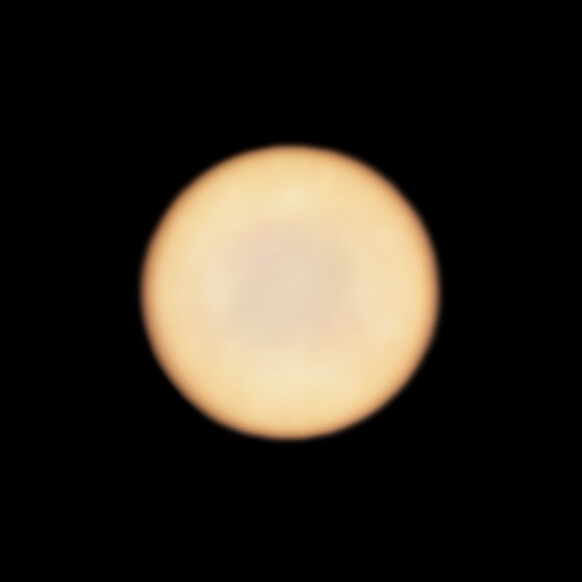
Between October 2020 and early 2021 several re-analyses appeared[2][3][7][5][16]. In November 2020 the team posted a re-analysis of ALMA data processed with a revised calibration, reporting phosphine at about 5 sigma at a lower abundance[9]. In July 2021 Nature Astronomy published an independent Matters Arising, the team's reply and an addendum to the original paper[6][9][4]. SOFIA searched for higher-frequency phosphine lines on three flights in November 2021 and found none[8]; the team disputed the result[17]. The team began a long-term monitoring programme at the JCMT, JCMT-Venus, in February 2022[12].
Timeline
The accounts
The detection team's own accounts are the discovery paper, its addendum and reply, and the 2024 review of possible sources[1][4][9][18]. David Clements's 2024 proceedings paper gives the team's account of the controversy and of public and scientific reactions, and states that the discovery papers did not claim evidence of life, only of phosphine[12]. The critical accounts are the independent re-analyses of the same data[2][3][6] and the radiative-transfer study that relocated the line to the mesosphere[5].
What was recorded
The primary record is two sets of millimetre spectra: the JCMT single-dish spectra of June 2017 and the ALMA interferometric data of 5 March 2019, both public in their archives[19][15]. In both, the claimed line is an absorption a few parts in ten thousand deep against the planet's continuum[10]. The difficulty is the baseline: the spectra carry ripples from standing waves and calibration of comparable size, and the line's significance depends on how they are removed[2][3]. ALMA adds a second difficulty, since an interferometer responds poorly to the broad, smooth emission of a planet's disk[16].
Other instruments looked at other altitudes and lines. TEXES on the NASA Infrared Telescope Facility, in March 2015 archival data near 950 cm⁻¹, found no phosphine to a 3-sigma limit of 5 ppbv near the cloud tops[7]. Venus Express SOIR occultation spectra gave upper limits above the clouds[14][20]. SOFIA's GREAT receiver set a limit of 0.8 ppb from 75 to 110 km[8]. From below, the 1978 Pioneer Venus Large Probe mass spectrometer recorded signals at 51.3 km that Mogul and colleagues assign in part to phosphine[11].
The JCMT-Venus programme has collected far more data than the discovery set, with the Ū'ū receiver covering phosphine, water (through HDO) and sulphur dioxide together[12]. Four multi-week campaigns had been completed by mid-2026 and a fifth was approved for July 2026; the team reports variability of sulphur dioxide and water over years and with local solar time, and a re-detection of phosphine[13].
The explanations
The first question is whether the line is real. Critics showed that high-order polynomial baselines can manufacture lines of the claimed strength, that the ALMA data at first carried a calibration problem, and that with other reductions the feature falls to about 2 sigma in ALMA and to insignificance in the JCMT data[2][3][4]. The detection team re-reduced both data sets with revised methods and reports the line at about 5 sigma in ALMA and at 6 to 8 sigma in both after removing sulphur dioxide contamination[9][10].
If the line is real, it could be sulphur dioxide, which also absorbs near 266.94 GHz. Lincowski and colleagues found that a typical mesospheric sulphur dioxide profile fits the JCMT feature, and that the line forms above 80 km, where phosphine would be destroyed too quickly to persist[5]. The detection team estimated the sulphur dioxide contribution at about 10 per cent in the JCMT spectrum and 2 per cent or less in ALMA[10].
If the line is phosphine, the abundance is in question. Estimates have fallen from about 20 ppb to a planet average of 1 to 4 ppb, with local peaks of 5 to 10 ppb[1][9]; SOFIA's limit of 0.8 ppb applies at 75 to 110 km[8], and the team has proposed that phosphine varies with time and altitude, destroyed by sunlight in the upper atmosphere and more abundant deeper in the clouds[9][12]. Its source would then be unknown chemistry, or, as the team says is an extreme possibility, an aerial microbial biosphere; no known abiotic route produces enough[21][18].
Published claims
| Year | Who | Claimed | Status | Reason |
|---|---|---|---|---|
| 2020 | Jane Greaves and colleagues[1] | JCMT and ALMA spectra show phosphine in Venus's clouds at about 20 ppb, a gas with no known abiotic source there, which may point to life. | Disputed | Independent re-analyses found the line could be a processing artefact or sulphur dioxide, and no independent group has reproduced it[2][6] |
| 2020 | Ignas Snellen and colleagues[2] | The 12th-order polynomial used to flatten the ALMA spectrum creates spurious lines, and an independent analysis finds the feature at only about 2 sigma. | Disputed | The detection team recovered the line in reprocessed data with other methods, so the dispute is not settled[9] |
| 2020 | Mark Thompson[3] | Re-analysed with other baselines and a bootstrap, the JCMT spectrum shows no significant line, and polynomial fitting produces false positives. | Disputed | The team's re-test of the JCMT line found it at 4.8 sigma against the baseline uncertainty, about 3 sigma on a stricter definition[4] |
| 2020 | Thérèse Encrenaz and colleagues[7] | Infrared spectra from 2015 show no phosphine, with an upper limit of 5 ppb, four times below the millimetre value. | Most likely | Other instruments also set limits below the claim, but the detection team argues they sample other altitudes and times[8][9] |
| 2021 | L. Trompet, Ann Carine Vandaele and colleagues[14] | Venus Express solar-occultation spectra show no phosphine above the cloud tops and set upper limits there. | Most likely | The limits apply above the clouds, where the detection team expects phosphine to be destroyed, so they do not test the cloud-level claim directly[9] |
| 2021 | Jane Greaves and colleagues[9] | Reprocessed ALMA data show phosphine at about 5 sigma, at a planet average of 1 to 4 ppb, and the JCMT line cannot be sulphur dioxide. | Disputed | Independent groups reading the same data attribute the feature to calibration or sulphur dioxide[6][5] |
| 2021 | Alex Akins, Andrew Lincowski, Victoria Meadows and Paul Steffes[16] | ALMA's response to a bright, extended planetary disk makes a weak, broad absorption line hard to detect reliably. | Disputed | ALMA issued a revised calibration for the Venus data, and the detection team still recovers the line from it[4][9] |
| 2021 | Andrew Lincowski, Victoria Meadows and colleagues[5] | The 266.94 GHz line forms above 80 km, and ordinary mesospheric sulphur dioxide fits the JCMT feature. | Disputed | The detection team used a simultaneous sulphur dioxide line to estimate contamination at about 10 per cent for JCMT and 2 per cent or less for ALMA[10] |
| 2021 | Geronimo Villanueva and 26 co-authors[6] | Independent analyses of the ALMA and JCMT data find no phosphine; the ALMA feature reflects calibration and the JCMT feature could be sulphur dioxide. | Disputed | The detection team's reply and later monitoring report the line again, but no independent group has[9][12] |
| 2021 | Rakesh Mogul and colleagues[11] | Mass-spectrometer data from the 1978 Pioneer Venus probe at 51 km contain phosphine and other reduced gases. | Still possible | The assignment rests on re-reading 1978 data, and no later measurement inside the clouds has tested it[11][18] |
| 2021 | William Bains, Sara Seager and colleagues[21] | No known abiotic process, in the atmosphere, at the surface or below, makes phosphine on Venus in the amounts reported. | Still possible | It matters only if the detection is confirmed, and a later review by overlapping authors leaves open that Venus chemistry is incomplete[18] |
| 2022 | Jane Greaves and colleagues[10] | Sulphur dioxide contaminates the phosphine line by about 10 per cent at JCMT and 2 per cent or less at ALMA, and the corrected spectra agree. | Disputed | Critics hold that the feature itself is not secure, which the correction does not address[6][2] |
| 2022 | Martin Cordiner, Geronimo Villanueva and colleagues[8] | Three SOFIA flights found no phosphine, with an upper limit of 0.8 ppb between 75 and 110 km. | Most likely | The detection team disputes the analysis and argues for variation with altitude and time, but has not had it confirmed[17] |
| 2023 | Jane Greaves and colleagues[17] | The SOFIA data, analysed differently, do not exclude phosphine and can be read as recovering it. | Disputed | No independent analysis of the SOFIA data supports the recovery, and the published limit stands[8] |
| 2024 | William Bains, Sara Seager and colleagues[18] | No known geochemical or photochemical route makes phosphine near the observed level, so either Venus chemistry is incomplete or an aerial microbial biosphere makes it. | Still possible | It depends on the detection, which is unconfirmed, and the biological option is untested[6] |
| 2024 | David Clements (JCMT-Venus)[12] | Multi-year JCMT monitoring recovers phosphine, at a preliminary 0.3 ppm near 55 km from an experimental method. | Still possible | The method is experimental and the result preliminary; no independent group has reproduced it[13] |
| 2026 | Wei Tang, David Clements, Jane Greaves and colleagues[13] | Four JCMT-Venus campaigns give a re-detection of phosphine, alongside variable sulphur dioxide and water. | Still possible | Reported in a conference abstract whose robustness was still to be discussed; no paper or independent confirmation yet[13] |
What would settle it
The decisive test is an independent detection: a group outside the original team recovering the line, or phosphine's other transitions, from new data with a reduction method fixed in advance and tested on injected fake lines. Publication of the JCMT-Venus spectra with their reduction code would allow that test on the largest data set. A spectrometer inside the atmosphere would settle it directly: phosphine at the parts-per-billion level in the clouds would be measured, or excluded, by a mass spectrometer or tunable-laser instrument on a descent probe. If phosphine is confirmed, the next question, whether its source is chemical or biological, would need the same in-situ measurements of the clouds' composition.
Questions
0 of 4 questions are answered.
Evidence 25 findings
Artifacts
The films, photos, papers and objects this mystery rests on, each with its own key and its distance from the original.
See also
References
- 1.Greaves, J., Richards, A., Bains, W. et al. 2020. Phosphine gas in the cloud decks of Venus. Nature Astronomy 5(7), 655–664.doicited 11 times hereSRC0CQY1GQ84YF1
- 2.Snellen, I., Guzman-Ramirez, L., Hogerheijde, M. et al. 2020. Re-analysis of the 267 GHz ALMA observations of Venus. Astronomy & Astrophysics 644, L2.doicited 7 times hereSRC0CQY1HEP0S8P
- 3.Thompson, M. 2020. The statistical reliability of 267-GHz JCMT observations of Venus: no significant evidence for phosphine absorption. Monthly Notices of the Royal Astronomical Society: Letters 501(1), L18–L22.doicited 4 times hereSRC0CQY1HPG5VT4
- 4.Greaves, J., Richards, A., Bains, W. et al. 2021. Addendum: Phosphine gas in the cloud deck of Venus. Nature Astronomy 5(7), 726–728.doicited 2 times hereSRC0CQY1GZ25FJN
- 5.Lincowski, A., Meadows, V., Crisp, D. et al. 2021. Claimed Detection of PH3 in the Clouds of Venus Is Consistent with Mesospheric SO2. The Astrophysical Journal Letters 908(2), L44.doicited 4 times hereSRC0CQY1JNR4MPS
- 6.Villanueva, G., Cordiner, M., Irwin, P. et al. 2021. No evidence of phosphine in the atmosphere of Venus from independent analyses. Nature Astronomy 5(7), 631–635.doicited 2 times hereSRC0CQY1HYA6YGJ
- 7.Encrenaz, T., Greathouse, T., Marcq, E. et al. 2020. A stringent upper limit of the PH3 abundance at the cloud top of Venus. Astronomy & Astrophysics 643, L5.doicited 5 times hereSRC0CQY1J645WRC
- 8.Cordiner, M., Villanueva, G., Wiesemeyer, H. et al. 2022. Phosphine in the Venusian Atmosphere: A Strict Upper Limit From SOFIA GREAT Observations. Geophysical Research Letters 49(22), e2022GL101055.doicited 8 times hereSRC0CQY1KN03DN2
- 9.Greaves, J., Richards, A., Bains, W. et al. 2021. Reply to: No evidence of phosphine in the atmosphere of Venus from independent analyses. Nature Astronomy 5(7), 636–639.doicited 10 times hereSRC0CQY1H6W1K9Y
- 10.Greaves, J., Rimmer, P., Richards, A. et al. 2022. Low levels of sulphur dioxide contamination of Venusian phosphine spectra. Monthly Notices of the Royal Astronomical Society 514(2), 2994–3001.doicited 6 times hereSRC0CQY1K5C5E45
- 11.Mogul, R., Limaye, S., Way, M. et al. 2021. Venus' Mass Spectra Show Signs of Disequilibria in the Middle Clouds. Geophysical Research Letters 48(7), e2020GL091327.doicited 6 times hereSRC0CQY1KD652Z5
- 12.Clements, D. 2024. Venus Phosphine: Updates and lessons learned. arXiv (Kavli-IAU Symposium 387 proceedings).doicited 6 times hereSRC0CQY1MM82G3E
- 13.Tang, W., Clements, D., Greaves, J. et al. 2026. JCMT-Venus: Long-term Monitoring of Chemical Variability in Venus' Upper Mesosphere. Europlanet Science Congress 2026, The Hague, 7–11 September 2026, EPSC2026-1119.doicited 5 times hereSRC0CQY1MW2501X
- 14.Trompet, L., Robert, S., Mahieux, A. et al. 2021. Phosphine in Venus' atmosphere: Detection attempts and upper limits above the cloud top assessed from the SOIR/VEx spectra. Astronomy & Astrophysics 645, L4.doicited 2 times hereSRC0CQY1JDY5BVQ
- 15.Greaves, J. 2019. ALMA project 2018.A.00023.S: Confirming Phosphine in the Atmosphere of Venus. ALMA Science Archive.cited 5 times hereSRC0CQY1N3W7BD4
- 16.Akins, A., Lincowski, A., Meadows, V. et al. 2021. Complications in the ALMA Detection of Phosphine at Venus. The Astrophysical Journal Letters 907(2), L27.doicited 2 times hereSRC0CQY1JXJ6BWR
- 17.Greaves, J., Petkowski, J., Richards, A. et al. 2023. Comment on "Phosphine in the Venusian Atmosphere: A Strict Upper Limit From SOFIA GREAT Observations" by Cordiner et al.. Geophysical Research Letters 50(23), e2023GL103539.doicited 2 times hereSRC0CQY1KWT6GY3
- 18.Bains, W., Seager, S., Clements, D. et al. 2024. Source of phosphine on Venus—An unsolved problem. Frontiers in Astronomy and Space Sciences 11, 1372057.doicited 5 times hereSRC0CQY1MCE6E7D
- 19.Greaves, J. 2017. JCMT project S16BP007: Venus at 266.94 GHz (RxA3/ACSIS), June 2017. Canadian Astronomy Data Centre, JCMT archive.cited 4 times hereSRC0CQY1NBP6MQX
- 20.European Space Agency 2026. ESA Planetary Science Archive: Venus Express. ESA Planetary Science Archive.cited 2 times hereSRC0CQY1NKG7XPQ
- 21.Bains, W., Petkowski, J., Seager, S. et al. 2021. Phosphine on Venus Cannot Be Explained by Conventional Processes. Astrobiology 21(10), 1277–1304.doicited 2 times hereSRC0CQY1M4M3WJG