Language isolate
A language with no demonstrated relative, so its words and grammar cannot be worked out by comparison with a known family.
A language isolate is a language that cannot be shown to belong to any family. Basque is the modern example; Sumerian, Hattic and Elamite are ancient ones [@michalowski2017isolates]. Being an isolate is a statement about evidence, not about history: every language had relatives once, but for an isolate none survive in a form that allows regular sound correspondences to be established.
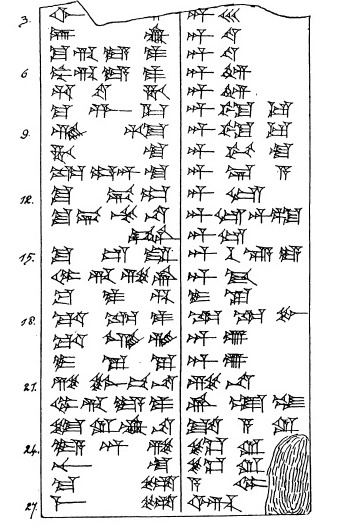
For an unread text the distinction matters more than anything else. A script can be fully deciphered, every sign given a sound, and the text still stay closed if the language is an isolate, because there is no related language from which to guess what the words mean. Hittite became readable in 1915 because it is Indo-European [@hrozny1915loesung]; Hattic, written in the same cuneiform in the same archive, did not, because it has no known relative and can be read only where a Hittite scribe translated it [@goedegebuure2010alignment] [@soysal2018zwischenbilanz]. A related category is the unclassified language, one too thinly attested to test for relatives at all, as with Kassite or Gutian [@zadok2013kassites].
Where it comes up






Sources 5
Cite it
Mysteries Department. (2026). Language isolate [Concept CPT0DEEBNN2HBN9]. https://mysteriesdept.com/r/CPT0DEEBNN2HBN9
@misc{mysteriesdept_cpt0deebnn2hbn9,
  title     = {Language isolate},
  author    = {{Mysteries Department}},
  year      = {2026},
  note      = {Concept, catalog key CPT0DEEBNN2HBN9},
  url       = {https://mysteriesdept.com/r/CPT0DEEBNN2HBN9}
}