The Somerton Man (Tamam Shud)
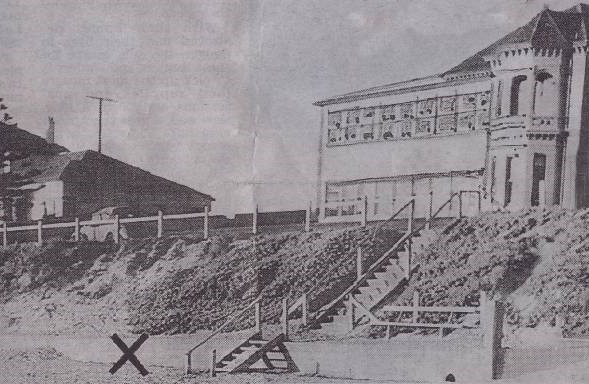
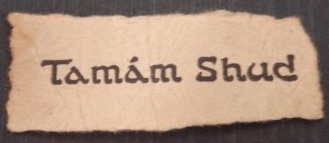
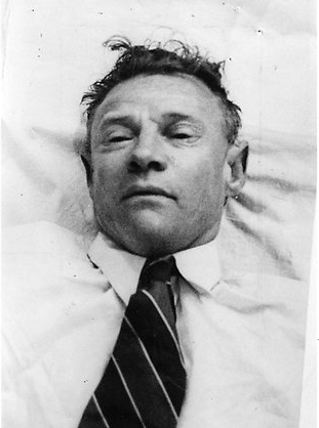
Early on 1 December 1948 a well-dressed man was found dead, propped against the sea wall at Somerton Park, a beach suburb of Adelaide. He carried no identification and the labels had been cut from his clothes. The pathologist found congested organs and no natural cause, and thought he had been poisoned; no poison was identified[1][2]. In June 1949 a rolled scrap of paper printed "Tamam Shud" ("it is ended") was found in a hidden fob pocket. It had been torn from a copy of the Rubaiyat of Omar Khayyam that a man handed to police in July; in the back of the book were five lines of pencilled capitals and an unlisted telephone number belonging to a Glenelg nurse, Jessica Thomson[3][4][2].
The inquest was adjourned in 1949 without finding who he was or how he died, and the case became Australia's best known unsolved death[1]. In 2009 Derek Abbott of the University of Adelaide began working on it with his students. In July 2022 he and the American genealogist Colleen Fitzpatrick announced that DNA from hairs embedded in the 1949 plaster bust matched relatives of Carl "Charles" Webb, an electrical instrument maker born in Melbourne in 1905 who had left his wife in 1947[5][6]. South Australia Police, which exhumed the body in May 2021, called itself "cautiously optimistic" but has not confirmed the identification; in July 2026 its report to the coroner was still being written[6][7]. Of the 4 questions on this site, 0 are answered. The most likely answer to “How did he die?”, not yet confirmed: he took poison deliberately, probably a cardiac glycoside or a hypnotic.
Key questionsset by the editors
What happened
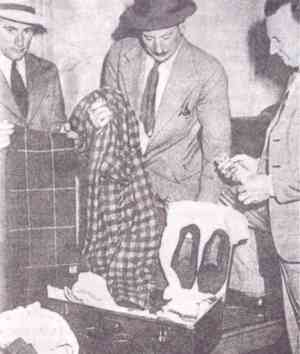
The man is thought to have arrived in Adelaide by overnight train on 30 November 1948. He bought a rail ticket to Henley Beach that he did not use, left a brown suitcase in the station cloakroom, and took a bus toward Glenelg. Two couples on the beach that evening saw a man lying in the same spot, one of them around 7 pm, the other between 7:30 and 8 pm. He was found dead there at about 6:30 the next morning; the autopsy put death at about 2 am, found no foreign substance, and the pathologist John Dwyer was "quite convinced the death could not have been natural"[2]. The suitcase, found in January 1949, held clothes with the name "T. Keane" or "Keane" and some cut labels; it was destroyed in 1986[2].
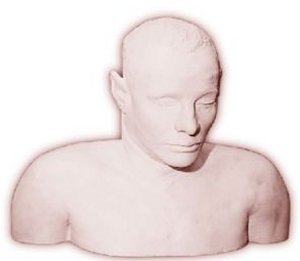
He was buried in West Terrace Cemetery in June 1949 after police made a plaster cast of his head and shoulders. The cast, which holds strands of his hair, is kept by the South Australia Police Historical Society[2].
Timeline
The accounts
The Rubaiyat was handed in on 22 July 1949 by a man who said he had found it in the back of his unlocked car at Glenelg around the time of the death; police used a pseudonym for him and he has never been named[4][2]. The telephone number in it led to Jessica Thomson, who lived about 400 metres from where the body lay. Shown the cast, she said she did not know the man; the detective who made the cast described her as close to fainting. She asked that her name be kept out of the case, and it was not made public until much later[2]. She said she had given a copy of the Rubaiyat to an army acquaintance, Alf Boxall, in 1945; Boxall was found alive in Sydney with his copy intact[2].
Webb's wife, Dorothy, described him as solitary, moody and violent, said he wrote poems about death, and said he had tried to kill himself with ether in March 1946. She left him in September 1946; he moved out in 1947 and she later divorced him for desertion. Her account is the main source on his state of mind[2][5].
What was recorded
The coroner's 1949 inquest file survives in State Records of South Australia (GRG1/27, file 71/1949) and is open; the file of the 1958 resumed inquest is restricted. Police files are not in the archive because the case is open[1]. The 1948 and 1949 autopsy reports themselves are missing[2].
The pencilled text in the Rubaiyat is known from the police photograph. It reads WRGOABABD, a struck-out MLIAOI, WTBIMPANETP, MLIABOAIAQC (with an X above the second O) and ITTMTSAMSTGAB. The first letters of lines one and three may be M or W, the first of the last line I or V, and its third-last letter G or C[2][8]. Naval and later Defence cryptographers could not read it; in 1978 the Department of Defence said there were "insufficient symbols" for a clear meaning and that it might be the product of a disturbed mind[9][2].
In 2009 Abbott's students compared the 44 letters with letter frequencies in eight languages, with random letters written by 37 sober and 18 intoxicated volunteers, and with the initial letters of English text. The best fit by far, under first- and second-order Markov models, was the initial letters of English words; Playfair, Vigenère and one-time-pad readings keyed on the Bible and the Rubaiyat failed[8]. A 2010 team searched large text collections for the code's initialism patterns and found none in the Rubaiyat[10]. John Rehling (2014) also found the letters almost certainly an initialism of English but found no matching passage in more than 20,000 Project Gutenberg books[11].
The DNA work went in stages. Abbott was allowed to take hair from the bust in 2011; in 2018 the Australian Centre for Ancient DNA recovered the full mitochondrial genome (haplogroup H4a1a1a); in 2022 an autosomal SNP profile from more hair was matched through genealogy databases to distant cousins on both sides of the Webb family, and the family tree narrowed the candidates to the one Webb sibling with no recorded death[5][6][12]. Police exhumed the body on 19 May 2021 for their own testing, which has not been reported[2][7].
The explanations
Identity. The Webb identification predicts that official DNA from the exhumed remains will match the Webb relatives and that no record of Webb's death elsewhere will turn up. It fits the "Keane" clothing, since Webb's sister Freda married a Thomas Keane[5]. It has not been tested by an independent laboratory in public, and the police have said only that the result will be for the coroner to decide[6][7]. Earlier proposed identities (the seaman H. C. Reynolds from a 1918 identity card, the Austrian milliner Carl Halban) rested on photographs or circumstance and are not supported by DNA[2]. The theory that Robin Thomson, Jessica's son, was the man's child, based on shared rare ear and tooth features, was ruled out by DNA[5].
Death. The pathologist favoured suicide by poison; a 1994 review by John Harber Phillips suggested digitalis[1][2]. Webb's history as his wife described it fits suicide, and Abbott and Fitzpatrick hold that view[2][7]. Murder and espionage theories, built on the Cold War setting and the missing labels, have no physical evidence behind them[2].
The code. The statistical work supports a list of initial letters of English words, written as shorthand, over a cipher; no source text has been found, and Abbott has suggested horse names, since Webb bet on races[8][11][2].
Published claims
| Year | Who | Claimed | Status | Reason |
|---|---|---|---|---|
| 1949 | Coroner Thomas Cleland[1] | The man almost certainly died of poison, probably a glucoside, not taken by accident, though whether he took it himself could not be said. | Most likely | The organs pointed to poisoning and no natural disease was found, but no poison was ever detected[1] |
| 1949 | Naval code experts, reported by The Advertiser[9] | The pencilled letters in the Rubaiyat are a code that naval experts could not break. | Disputed | Playfair, Vigenère and one-time-pad readings all fail, and the letters behave like the initials of English words[8] |
| 2009 | Andrew Turnbull and Denley Bihari, under Derek Abbott[8] | The code is most likely the initial letters of an English text, not a cipher and not random letters. | Accepted | An independent n-gram analysis reached the same result, though no matching passage has been found[11] |
| 2013 | Kate Thomson[13] | Her mother Jessica Thomson knew who the man was, lied to police, and was linked to Soviet spying. | Still possible | It rests on what her mother told her, with no document behind it[13] |
| 2013 | Roma and Rachel Egan[13] | The Somerton Man was the father of Jessica Thomson's son Robin, who shared his rare ear and tooth traits. | Ruled out | DNA found no family link between Rachel Egan, Robin's daughter, and the man[5] |
| 2014 | John Rehling[11] | An n-gram analysis shows the code is almost certainly an initialism of short English text. | Accepted | It agrees with the Adelaide students' Markov tests[8] |
| 2022 | Derek Abbott and Colleen Fitzpatrick[5] | DNA from hair in the death mask identifies the man as Carl "Charles" Webb, an electrical instrument maker from Melbourne born in 1905. | Accepted | Matches on both sides of Webb's family and the Keane names on clothes in the suitcase support it, though police have not yet reported to the coroner[6][7] |
What would settle it
The coroner's findings, based on police DNA from the exhumed remains compared with Webb relatives, would settle the identity. A source document for the code (a race card, a poem, a draft in Webb's hand) would settle the code, and handwriting comparison with any surviving Webb writing would at least show who wrote it. Cause of death is probably beyond reach: Abbott says the remains can tell nothing more about it[7].
Questions
0 of 4 questions are answered.
Evidence 19 findings
Artifacts
The films, photos, papers and objects this mystery rests on, each with its own key and its distance from the original.
See also
References
- 1.State Records of South Australia n.d.. 'But what poison?' Mystery of the Somerton Man. Archives SA, Stories from the archive (first posted 2015; updated 7 September 2022).cited 8 times hereSRC0CVC1QEJ5129
- 2.Wikipedia contributors n.d.. Somerton Man. Wikipedia.cited 33 times hereSRC0CVC1S587WM4
- 3.The Advertiser (Adelaide) 1949. Cryptic Note on Body. The Advertiser, 9 June 1949, p. 1.cited 3 times hereSRC0CVC1QPC0KPQ
- 4.The Advertiser (Adelaide) 1949. Police Test Book For Somerton Body Clue. The Advertiser, 26 July 1949, p. 3.cited 3 times hereSRC0CVC1QY66476
- 5.Identifinders International 2022. The Somerton Man Identified. PR Newswire, 26 July 2022.cited 11 times hereSRC0CVC1PYY2H6E
- 6.Bonvillian, C. 2022. DNA leads to ID of Australia's Somerton man, researchers say. Cox Media Group National Content Desk (WSB-TV), 2 August 2022.cited 3 times hereSRC0CVC1PQ46YF7
- 7.Boisvert, E. 2026. SA Police report to coroner into Somerton Man case complete 'very soon'. ABC News, 6 July 2026.cited 6 times hereSRC0CVC1PFA0V0E
- 8.Turnbull, A., Bihari, D. 2009. Final report 2009: Who killed the Somerton man?. University of Adelaide, School of Electrical and Electronic Engineering honours project (supervisors Derek Abbott, Matthew Berryman).cited 8 times hereSRC0CVC1RDT58E3
- 9.The Advertiser (Adelaide) 1949. This beat the Navy. The Advertiser, 29 August 1949, p. 2.cited 2 times hereSRC0CVC1R602ZCK
- 10.University of Adelaide honours project team 2010. Final Report 2010 (Cipher Cracking 2010). University of Adelaide, Derek Abbott's project wiki.cited 1 time hereSRC0CVC1RNM7337
- 11.Rehling, J. 2014. Murder and NLP: Taman Shud case splash. NLP Confidential (blog), 24 July 2014.cited 4 times hereSRC0CVC1RXE1BT9
- 12.Abbott, D. 2023. Finding Somerton Man: How DNA, AI Facial Reconstruction, and Sheer Grit Cracked a 75-Year-Old Cold Case. IEEE Spectrum 60(4): 22-30.doicited 1 time hereSRC0CVC1Q6R3MRS
- 13.Pelling, N. 2013. 60 Minutes and the "known" Somerton Man. Cipher Mysteries, 24 November 2013.cited 1 time hereSRC0CVC1SWP2HMB