Rongorongo
Rongorongo is a system of glyphs carved into wood on Rapa Nui. The glyphs are stylised outlines of people, birds, fish, plants and geometric forms, cut in lines that alternate direction and orientation so that the reader turns the tablet after each line (reverse boustrophedon). About 26 inscribed objects survive, scattered among museums in Rome, Santiago, London, Vienna, Berlin, St Petersburg, Washington, Honolulu, New York and Paris; one, the Keiti tablet, burned in Louvain in 1914 and is known only from rubbings and photographs[1][2]. The texts range from a couple of glyphs to over 2,000 on the Santiago Staff, and total more than 15,000 glyphs[3][1].
None of it has been read. The island's missionaries first noticed the tablets in 1864, when the population had collapsed through slave raids and epidemics, and no islander who could demonstrate reading was ever found. Bishop Jaussen's informant Metoro, in Tahiti in the 1870s, chanted over four tablets, but his "readings" name the glyphs one by one and do not form a text; he read lines in the wrong direction and missed the one passage whose content is now agreed[4][5]. Since then the field has produced two secure results and a long list of rejected claims. The secure results are Barthel's 1958 corpus and catalogue, which gave every object a letter and every glyph a number, and the identification of a lunar calendar on the Mamari tablet, whose structure Guy worked out in 1990[2][6]. The best-known claim, Fischer's 1995 reading of the Santiago Staff as a procreation chant, failed statistical tests[7][8].
Two things have changed since 2020. New tracings of the whole corpus by Horley, and 3D models of individual tablets, give sign shapes that can be compared without relying on Barthel's drawings[9][10]. And radiocarbon dating has started to address the oldest question about the script, whether it existed before Europeans arrived in 1722 or was inspired by the sight of Spanish writing in 1770. Four tablets in Rome were dated in 2024; three are nineteenth century and one gives wood of 1493 to 1509[11]. The Berlin tablet, dated separately, is nineteenth century and made from a tree that grew on the island[12]. Of the 5 questions on this site, 1 are answered. The most likely answer to “Did rongorongo exist before European contact in 1722?”, not yet confirmed: rongorongo was invented on Rapa Nui before 1722.
Key questionsset by the editors
The object
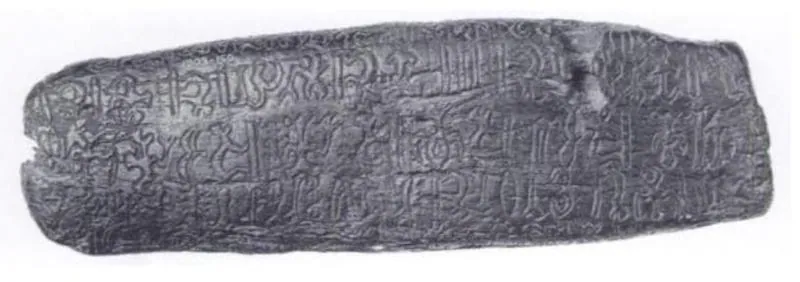
The corpus is a set of wooden objects: flat tablets, a staff, two reimiro pectorals, a birdman figure, a snuff box made from a cut-up tablet, and a few fragments. Barthel lettered 24 of them A to X in 1958; the Paris snuff box (Y) and the Poike palimpsest (Z) were added later[2][3]. The holders are the Congregation of the Sacred Hearts in Rome (A Tahua, B Aruku Kurenga, C Mamari, D Échancrée), the Museo Nacional de Historia Natural in Santiago (G, H, I the Staff, Z), the British Museum (J, K, L), the Weltmuseum Wien (M, N), the Ethnologisches Museum Berlin (O), the Kunstkamera in St Petersburg (P, Q), the Smithsonian (R, S), the Bishop Museum in Honolulu (T, U, V, W), the American Museum of Natural History (X), a private collection (F) and a Paris museum (Y)[1]. The Keiti tablet (E) was destroyed in 1914[1].
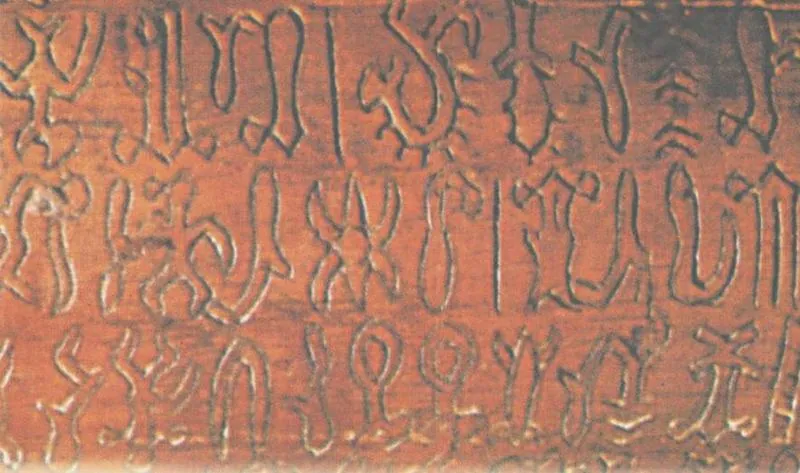
Wood identifications by Orliac found most tablets to be Thespesia populnea (Pacific rosewood), a tree that grew on the island, rather than the toromiro of island tradition; a few are of Podocarpus (yellowwood), ash or driftwood[13][1]. The Berlin tablet is Thespesia and so was not driftwood[12]. The glyphs were cut with sharp points, probably obsidian flakes and shark teeth, after sketching, and show scribal corrections[14]. Lines run in reverse boustrophedon: the reader begins at the bottom left, reads left to right, then turns the tablet to read the next line[2].
Three editions matter. Barthel's 1958 Grundlagen published drawings and the glyph catalogue; Fischer's 1997 book redrew the corpus; Horley's 2021 volume gives new tracings from the originals, casts and photographs[2][15][9]. A web viewer at kohaumotu.org places Barthel's and Fischer's transcriptions side by side in Barthel's number encoding, and is the only machine-readable version of the texts that exists[16]. A 3D model of the Échancrée tablet, from photogrammetry and structured-light scanning, is in a public viewer[10].
Timeline
What is known
The glyphs are a system, not decoration. The same compound glyphs recur across tablets held on different continents, repeated phrases appear in several texts, and the glyphs are cut in a consistent direction and orientation[17][2]. Pozdniakov's reanalysis of the best-preserved texts merged Barthel's variants and ligatures and found that 52 basic glyphs account for 99.7 per cent of all glyph occurrences, and that the frequency distribution of these glyphs resembles that of syllables in the Rapanui language, which he took as evidence that the script could be syllabic[8]. Barthel's own catalogue, with about 600 numbers, is regarded as imprecise, with inconsistencies in what counts as a variant[3].
One passage has an agreed function. On side a of the Mamari tablet a sequence of 29 or so crescent glyphs with attached signs was recognised by Barthel as a lunar calendar; Guy showed its structure, with groups of nights marked by "heralding" sequences and a rule that could insert intercalary nights to keep the 28-night month in step with the moon[6][18]. The calendar can be described but not read, and no other passage has been matched to any known content. A repetitive run on the Small Santiago tablet has been read since 1957 as a genealogy, a plausible but unconfirmed suggestion[19].
The dating is now partly empirical. Four tablets in Rome were radiocarbon dated in 2024 on cellulose from the wood: three fall in the 1800s, one in 1493 to 1509[11]. The Berlin tablet dates to about 1830 to 1870 after adjusting for the ethnographic record of its use[12]. Every direct date is a date for the wood, not the carving.
What has been tested
Metoro's chants for Jaussen were the first thing tested. Barthel showed in 1958 that Metoro read the lines of Keiti in the wrong direction on alternating sides, and Guy found that he read the Mamari calendar backwards and missed its full-moon glyph; the "Jaussen list" of glosses is a list of what the glyphs look like, not a key[4][5][6]. Butinov and Knorozov's statistics in the 1950s suggested the language was either not Polynesian or written telegraphically, a result later blamed on Barthel's encoding, which gave separate codes to allographs and ligatures[19][8].
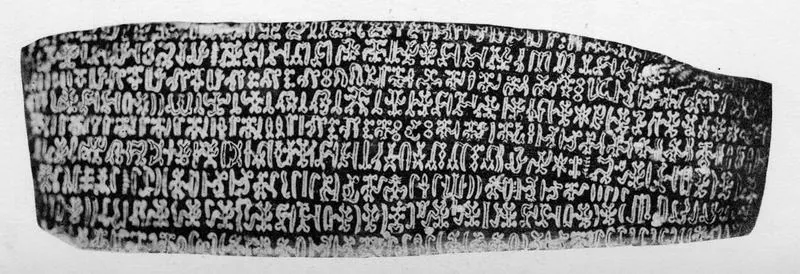
Fischer's procreation-chant reading was tested on several fronts. Only about 63 of the sequences on the Santiago Staff fit his triad structure even generously; the four glyphs in his key example are so common that they make up a fifth of the corpus, which makes the reading unfalsifiable; the Rapanui plural marker it relies on is disputed; and the staff remains a statistical outlier in string-matching against the other texts even with the "phallus" glyph removed[5][8][15]. The field has not accepted it.
Palaeographic and imaging work has tested the drawings themselves. Horley's study of tool marks corrected glyph identifications in Barthel, and the 2021 3D model of the Échancrée produced a new transcription that differs from earlier ones at several points[14][10]. Wieczorek's group has run glyph-occurrence statistics across the corpus looking for a second calendar-like text and has proposed a duplicator glyph; these are reported in interviews and await full publication[20].
The readings
Four positions are live on what rongorongo is. The first is that it is glottographic writing, probably logosyllabic or syllabic, recording the Rapanui language; the evidence is the structured repetition, the 52-glyph inventory and its syllable-like frequency profile, and the genealogy and calendar passages[8][19]. The second is that it is proto-writing or a mnemonic system that cued chants without encoding them phonetically, a view that fits the failure of every phonetic reading and the stylised pictorial glyphs[5]. The third is Fischer's specific reading as procreation chants, which has failed its tests[15][8]. The fourth is a set of outsider proposals linking the glyphs to the Indus script or other distant systems, which no specialist accepts[5].
On origin, two readings compete. One holds that the system was invented on the island before 1722, which the 1493 to 1509 wood date supports if the wood was carved soon after it grew[11]. The other holds that it was inspired by the Spanish annexation ceremony of 1770, at which islanders "signed" a document, and so is an eighteenth-century invention; this fits the nineteenth-century dates of every other dated tablet and leaves the early date to be explained as old wood or driftwood carved later[11][12].
Published claims
| Year | Who | Claimed | Status | Reason |
|---|---|---|---|---|
| 1932 | Guillaume de Hevesy (reported in Nature)[21] | Several rongorongo signs also occur on the Indus seals of Mohenjo-daro, and others in proto-Elamite, so the scripts are related. | Disputed | No specialist accepts it, and every dated tablet is from the last six centuries[5][11] |
| 1957 | Nikolai Butinov and Yuri Knorozov[19] | A repeated run of about fifteen glyphs on the Small Santiago tablet is a genealogy, with one glyph marking a title. | Still possible | It is still regarded as plausible, but no reading of the names has been confirmed[5] |
| 1958 | Thomas Barthel[2] | The corpus uses several hundred distinct signs, catalogued in a numbering that runs to 700. | Disputed | Later analysis merged most of his numbers as variants and ligatures of about 52 basic glyphs, and his inventory is criticised as too fine[8][3] |
| 1990 | Jacques Guy[6] | The crescent sequence on the Mamari tablet is a lunar calendar with a rule for inserting one or two intercalary nights. | Most likely | The passage is generally accepted as lunar, but the intercalation rule has not been independently confirmed[5] |
| 1995 | Steven Roger Fischer[7] | The Santiago Staff and most other texts are procreation chants of the form X copulated with Y and there issued forth Z, marked by glyph 76. | Disputed | Statistical tests found that glyph 76 and the other glyphs in his key example are common signs, together about a fifth of the corpus, with no fixed role[8] |
| 1996 | Konstantin Pozdniakov[17] | About a hundred phrases shared between texts show that many of Barthel's signs are variants or ligatures of a much smaller set of basic glyphs. | Most likely | The reduced inventory has held in later statistical work, though the corpus is too small to fix the exact count[8] |
| 2005 | Catherine Orliac[13] | Most tablets are carved on Pacific rosewood (Thespesia populnea), not the toromiro of tradition. | Accepted | Later wood identifications on the Berlin tablet found the same species[12] |
| 2006 | Gordon and Michael Berthin[18] | The text after the Mamari calendar shows where the intercalary nights fall. | Still possible | It builds on Guy's reading, which itself awaits independent confirmation[6] |
| 2007 | Konstantin and Igor Pozdniakov[8] | 52 basic glyphs make up 99.7 per cent of the corpus, and their frequencies resemble Rapanui syllables, so the script could be syllabic. | Still possible | The inventory count is widely used, but the syllabic reading has produced no confirmed reading of a text[5] |
| 2021 | Rafał Wieczorek, Paul Horley and colleagues[12] | The Berlin tablet is Rapa Nui Thespesia wood, not driftwood, dated to about 1830 to 1870, and once held over 5,000 glyphs. | Accepted | No later study disputes the identification or the date, which match the nineteenth-century dates on other tablets[11] |
| 2024 | Silvia Ferrara, Sahra Talamo and colleagues[11] | The wood of one Rome tablet dates to 1493 to 1509, so rongorongo was in use before Europeans reached the island. | Most likely | The date is secure for the wood, but old or salvaged wood could have been carved later, and the other dated tablets are nineteenth century[11][12] |
What would settle it
The origin question needs direct dates on more tablets, ideally with the carving dated rather than the wood, which would mean dating the outermost rings or any organic residue in the cuts; Wieczorek has called for all tablets to be dated[11][12]. The writing question needs an open, sign-level corpus built on Horley's tracings and the 3D models rather than on Barthel's codes, so that inventory, positional statistics and repeated-phrase alignment can be re-run and compared with Rapanui chants and with null corpora[9][10][8]. A reading would be settled only by a proposal that reads every attested variant of the Mamari calendar and the genealogy run in Rapanui, with sign values that hold across the whole corpus, and that predicts the content of a passage before it is checked[6][19].
Questions
1 of 5 questions are answered.
Evidence 18 findings
Artifacts
The films, photos, papers and objects this mystery rests on, each with its own key and its distance from the original.
See also
References
- 1.Wikipedia contributors n.d.. Rongorongo. Wikipedia.cited 7 times hereSRC0D4CC5SC1JNY
- 2.Barthel, T. 1958. Grundlagen zur Entzifferung der Osterinselschrift. Abhandlungen aus dem Gebiet der Auslandskunde 64. Cram, de Gruyter, Hamburg.doicited 5 times hereSRC0D4CC1MJ1XYS
- 3.Melka, T., Schoch, R. 2021. The Quest for Information Retrieval: An Inscribed Relic from Ancient Rapa Nui (Easter Island), Part I. Asian and African Studies 30(1).doicited 3 times hereSRC0D4CC4T46KK6
- 4.Jaussen, F. 1893. L'île de Pâques. Historique, écriture et répertoire des signes des tablettes ou bois d'hibiscus intelligents. Bulletin de Géographie historique et descriptive 2.cited 5 times hereSRC0D4CC59R7SZ7
- 5.Wikipedia contributors n.d.. Decipherment of rongorongo. Wikipedia.cited 8 times hereSRC0D4CC616274N
- 6.Guy, J. 1990. The Lunar Calendar of Tablet Mamari. Journal de la Société des Océanistes 91.doicited 7 times hereSRC0D4CC2KT4FJD
- 7.Fischer, S. 1995. Preliminary Evidence for Cosmogonic Texts in Rapanui's Rongorongo Inscriptions. Journal of the Polynesian Society 104(3).cited 3 times hereSRC0D4CC3TW5TTQ
- 8.Pozdniakov, K., Pozdniakov, I. 2007. Rapanui Writing and the Rapanui Language: Preliminary Results of a Statistical Analysis. Forum for Anthropology and Culture 3.cited 10 times hereSRC0D4CC3B84Y6E
- 9.Horley, P. 2021. Rongorongo: Inscribed Objects from Rapa Nui. Rapa Nui Press, Viña del Mar.cited 4 times hereSRC0D4CC2462EHC
- 10.Lastilla, L., Ravanelli, R., Valério, M. et al. 2021. Modelling the Rongorongo tablets: A new transcription of the Échancrée tablet and the foundation for decipherment attempts. Digital Scholarship in the Humanities 37(2).doicited 3 times hereSRC0D4CC4JA6MS9
- 11.Ferrara, S., Tassoni, L., Kromer, B. et al. 2024. The invention of writing on Rapa Nui (Easter Island). New radiocarbon dates on the Rongorongo script. Scientific Reports.doicited 23 times hereSRC0D8MQWEW6RB2
- 12.Wieczorek, R., Frankiewicz, K., Oskolski, A. et al. 2023. The rongorongo tablet from Berlin and the time-depth of Easter Island's writing system. Journal of Island and Coastal Archaeology 18(2).doicited 5 times hereSRC0D4CC4AG0T1J
- 13.Orliac, C. 2005. The Rongorongo Tablets from Easter Island: Botanical Identification and 14C Dating. Archaeology in Oceania 40(3).doicited 1 time hereSRC0D4CC51Y1A8J
- 14.Horley, P. 2009. Rongorongo Script: Carving Techniques and Scribal Corrections. Journal de la Société des Océanistes 129.doicited 1 time hereSRC0D4CC2C01RJV
- 15.Fischer, S. 1997. Rongorongo: The Easter Island Script. History, Traditions, Texts. Oxford Studies in Anthropological Linguistics 14. Clarendon Press, Oxford.doicited 5 times hereSRC0D4CC1WC6BCB
- 16.Kohaumotu / CEIPP mirror n.d.. Rongorongo corpus viewer (Barthel and Fischer transcriptions). kohaumotu.org.cited 2 times hereSRC0D4CC69023R2
- 17.Pozdniakov, K. 1996. Les bases du déchiffrement de l'écriture de l'île de Pâques. Journal de la Société des Océanistes 103.doicited 2 times hereSRC0D4CC33E2ZSH
- 18.Berthin, G., Berthin, M. 2006. Astronomical Utility and Poetic Metaphor in the Rongorongo Lunar Calendar. Applied Semiotics / Sémiotique appliquée 8(18).cited 2 times hereSRC0D4CC2VM40KW
- 19.Butinov, N., Knorozov, Y. 1957. Preliminary Report on the Study of the Written Language of Easter Island. Journal of the Polynesian Society 66(1).cited 2 times hereSRC0D4CC3K24TCJ
- 20.Science in Poland (PAP) 2021. Easter Island glyphs on boomerang-shaped wood. scienceinpoland.pl.cited 1 time hereSRC0D4CC5HJ7MWW
- 21.Nature 1932. Undeciphered Scripts. Nature 130, p. 502 (1 October 1932).doicited 1 time hereSRC0D4CC6RM13FR