Method · epigraphy; statistics
Within-name position test against a shuffle
Look for name templates, such as the Sumerian en-X and lugal-X types, without reading the signs.
Questions it answers
- Do the roughly 440 personal names in the archaic texts follow Sumerian, Semitic or some other naming pattern?
- Is KU.ŠIM ('Kushim') in the Uruk III barley accounts a person's name or an office?
- Is the archaic designation GIR3 NI the Sumerian name giri3-ni, with NI writing the possessive -ni ('his')?
- What language, if any, do the proto-cuneiform texts record?
- When and how did phonetic spelling begin in Mesopotamian writing?
Code Python
Runs and results 8 runs · 6 shown
Applied to
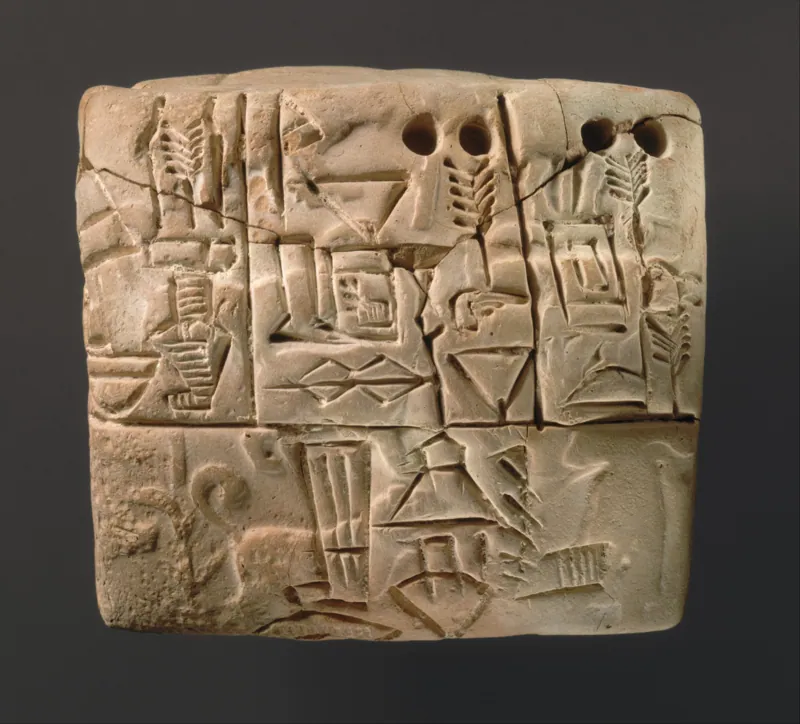
2 datasetsArchaic personal names in proto-cuneiform (editor-marked, CDLI), Early Dynastic Sumerian personal names, lemmatized (Oracc ePSD2 admin corpora ED I–II, IIIa, IIIb)
References
- Updated sign-frequency list for the whole CDLI proto-cuneiform corpus (6,726 artifacts, 5,274 with readable signs, about 53,000 non-numerical tokens as of May 2020), an open counting tool, and a test showing the Tribute list's first section uses sign pairs rare in administrative texts. Cuneiform Digital Library Bulletin 2021:6.
- Recent survey of proto-cuneiform and its adaptation (proto-Elamite), restating Englund's case against Sumerian (no Sumerian-pattern names; numeral-before-noun syntax), dating the first secure syllabic signs to the Archaic Ur texts (c. 2900-2700 BC), and discussing Sproat's simulation and Glassner's divination theory. Oxford Research Archive preprint; year inferred from its latest references.