UVB-76, "the Buzzer"
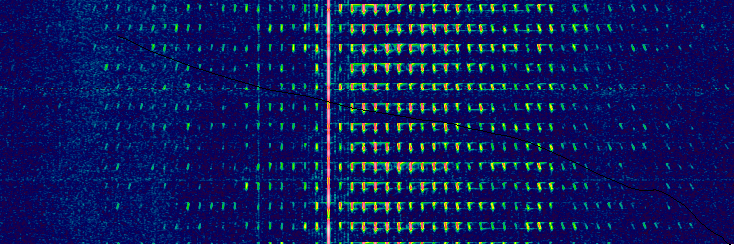
Anyone with a shortwave receiver can tune to 4625 kHz and hear a dull buzz, repeated every couple of seconds[1]. Listeners in the West first reported it between 1976 and 1982, and the Dutch monitor Ary Boender recorded it in January 1982[2][3]. Every so often the buzz stops and a live voice reads a short message in Russian: a call sign, groups of digits and a code word, spelled out letter by letter[4]. The station's popular name, UVB-76, comes from an early mishearing of the call sign UZB-76[2].
What it is, broadly, is not much disputed among people who listen to it. Its message formats, call signs and behaviour match Russian military radio networks, and the community that logs it treats it as a command network of a Russian military district, using the buzz as a channel marker that holds the frequency[4][3]. What it is for, specifically, is unknown. Russia has never acknowledged it; no message has been decoded; and the most-quoted expert view is that "there's absolutely no information in the signal"[1].
That gap has been filled by theories. The most famous is that the buzz is a "dead hand" signal whose silence would trigger nuclear retaliation; others propose ionospheric sounding, communication with submarines or messages to spies abroad[1]. There is no peer-reviewed study of the station. The record is primary: recordings made by named listeners since 1982, and a public log of thousands of messages since 2010 kept by the Priyom.org group[2][5]. The one scientific paper that touches it is a 2008 description of a Russian geophysical observatory that uses a stable 4.625 MHz broadcast carrier for ionospheric Doppler measurements[6]. Of the 4 questions on this site, 0 are answered. The most likely answer to “Does the station's message traffic track military events?”, not yet confirmed: variation in logged traffic mostly reflects routine scheduling and the effort of listeners, not events.
Key questionsset by the editors
What happened
The station was on the air by January 1982 with a channel marker; by about 1990 the marker had become the present buzz[2]. Its transmitter stood at a military compound near the village of Povarovo, about 40 minutes' drive north-west of Moscow[3]. The first voice message on record was logged on 24 December 1997 at 21:58 UTC with the call sign UZB-76; on 3 November 2001 an open microphone carried a snatch of operators' conversation[2].
In 2010 the station's behaviour changed. In June the hourly two-tone signal stopped; in early September the transmitter was tested with recordings of Swan Lake; on 7 September a new call sign, MDZhB, appeared; and on 11 November a half-hour telephone conversation was transmitted by mistake[2][3]. Listeners concluded that the transmitter had moved, toward Pskov in one account[3] and to sites near Saint Petersburg in Priyom's, coinciding with the reorganisation of Russia's military districts that September[4][3]. Call signs changed again at the end of 2015, in early 2019 and at the end of 2020; Priyom attributes the network to the Leningrad Military District since that district was re-formed in February 2024[4].
In January 2022, as Russian forces gathered near Ukraine, pirates flooded the frequency with music and audio that drew images on a spectrogram[7]. Priyom logged about 40 messages in each of January and February 2022[5]. On 14 November 2025 the station went quiet; a monitoring channel blamed a power cut after a drone strike on a substation[8]. It was on the air again by early January 2026, when listeners reported music and coded messages on the frequency[9].
Timeline
The accounts
There are no official accounts. The history rests on listeners. Ary Boender's recordings from 1982, 1989 and 1991 fix the early sound and the hourly time signal[2]. Priyom's primer, written in 2012, sets out the chronology tied to recordings and warns that much of what circulates online is folklore[2]. Peter Savodnik visited Povarovo for Wired in 2011 and found a nearly abandoned compound with open gates; he also recorded the views of Boender and of a former European official, identified as JM, that the station passes coded orders to military units inside Russia[3].
The named expert on record is David Stupples of City, University of London, who told the BBC that the signal carries no information and argued against two popular readings[1]. Priyom's own primer disputes the common label: despite its designation S28 in the numbers-station catalogue, it says, the Buzzer is not a numbers station[2].
What was recorded
The record is unusually complete for an unexplained signal. Priyom publishes month-by-month logs from 2010 to December 2024, each entry with the date, UTC time, emission mode, call signs, a five-digit group, a code word and two four-digit groups, credited to a named logger[5]. A rough parse of the 128 log pages for this record found about 2,700 entries, ranging from a few dozen a year (2013, 2020) to more than 350 (2015)[5]. The counts reflect who was listening as much as what was sent: Priyom's primer warns that apparent increases in activity may reflect better monitoring[2], and the logs have months with no entries at all[5].
Audio exists from every period: the 1982, 1989 and 1991 recordings hosted by Priyom[2]; a 1990s recording in the Conet Project anthology[10]; 130 recordings from late 2010 released into the public domain[11]. Messages follow a fixed format, and the call signs and code words change, but none has been read: the content is presumed to rest on code tables that have never been published[4].
The explanations
The command-network reading holds that the station is a channel of a Russian military district, used to pass short coded orders or alerts to subordinate units, with the buzz as a channel marker that holds the frequency[4][3]. It explains the formats, the call-sign changes that track military reorganisations, the live operators and the occasional open microphones[2]. It does not say what the messages mean.
The dead-hand reading holds that the buzz is part of an automatic nuclear retaliation system and that its silence would signal a decapitating strike[1]. Against it: the transmitter often fails, goes off for maintenance and carries pirate traffic[2][7]; Stupples notes that a link meant to be guaranteed would change frequency with the time of day to follow the ionosphere, which the Buzzer does not[1]. The November 2025 outage is a further test of the reading: if the report is right, the station was silent without consequence[8].
The ionospheric reading holds that the station measures the height of the ionosphere, which over-the-horizon radar needs. Stupples rejects it because sounders sweep frequency and sound nothing like the Buzzer[1]. A related, documented fact is different in kind: a Russian observatory uses a stable 4.625 MHz broadcast carrier as the reference for ionospheric Doppler measurements[6]. That shows the carrier is stable and useful to science, not that science is its purpose.
Published claims
| Year | Who | Claimed | Status | Reason |
|---|---|---|---|---|
| 2008 | S. V. Anisimov, A. Chulliat and E. M. Dmitriev[6] | The Borok Geophysical Observatory uses a highly stable shortwave broadcast carrier on 4.625 MHz as the reference for Doppler sounding of the ionosphere. | Accepted | A description of the observatory's own instruments; it shows the carrier is used by science, not that sounding is the station's purpose[6][1]. |
| 2011 | Peter Savodnik, quoting Ary Boender and a former European official[3] | The station is a conventional military channel that passes coded orders to units inside Russia, and the buzz holds the frequency between messages. | Most likely | It fits the message formats, live operators and call-sign changes that follow military reorganisations, but no official source or decoded message confirms it[2][1]. |
| 2011 | Peter Savodnik, quoting a former European official[3] | After the 2010 disruptions the transmitter moved from Povarovo to a site near Pskov, close to the Estonian border. | Still possible | The placement was not based on triangulation, and Priyom traces the post-2010 transmitters to sites near Saint Petersburg and Moscow instead[4]. |
| 2012 | Priyom.org[2] | Despite its catalogue designation S28, the Buzzer is not a numbers station sending messages to agents abroad. | Accepted | Its short, unscheduled messages in Russian military formats differ from the long scheduled groups of espionage broadcasts[4]. |
| 2012 | Priyom.org[2] | Apparent increases in the station's activity may reflect better monitoring rather than more traffic. | Still possible | The logs have months with no entries, and no one has corrected the message series for listening effort[5]. |
| 2017 | David Stupples (interviewed by Zaria Gorvett)[1] | The buzz carries no information, the station is not an ionospheric sounder, and a guaranteed nuclear link would change frequency with the time of day, which this one does not. | Most likely | No one has shown information in the marker, and the station's frequent outages and pirate traffic also count against a dead-hand role[2][7]. |
| 2025 | Vlad Litnarovych, relaying the UVB-76 Efir monitoring channel[8] | The station went silent on 14 November 2025 because a drone strike cut power to a substation. | Still possible | A single report relaying a monitoring channel; the station was heard again by January 2026, and the cause of the silence is unconfirmed[9]. |
What would settle it
An official statement or a declassified document would. Short of that, the data can narrow it. A time-difference-of-arrival fix from networked receivers would locate the transmitters and show how often they are switched. A complete, timestamped message series, merged from Priyom's logs and independent recordings to correct for gaps, could be tested against dated military events such as exercises, mobilisations and the February 2024 district reorganisation[5]. The dead-hand reading makes a sharp prediction: outages of the marker should never occur without immediate restoration from a backup. A record of outages, such as November 2025, tests it directly[8].
Questions
0 of 4 questions are answered.
Evidence 19 findings
Artifacts
The films, photos, papers and objects this mystery rests on, each with its own key and its distance from the original.
See also
References
- 1.Gorvett, Z. 2017. The ghostly radio station that no one claims to run. BBC Future, 1 August 2017 (republished 15 July 2020).cited 10 times hereSRC0CR2JJAG3NR3
- 2.Priyom.org 2012. The Buzzer Primer. Priyom.org, 25 March 2012.cited 16 times hereSRC0CR2JHK21TQ1
- 3.Savodnik, P. 2011. Inside the Russian Short Wave Radio Enigma. Wired, 27 September 2011.cited 9 times hereSRC0CR2JJ2P1FVJ
- 4.Priyom.org n.d.. The Buzzer (S28). Priyom.org, Military Stations, Russia.cited 13 times hereSRC0CR2JHB81T45
- 5.Priyom.org loggers n.d.. The Buzzer: monthly message logs, 2010–2024. Priyom.org.cited 8 times hereSRC0CR2JHTW00YT
- 6.Anisimov, S., Chulliat, A., Dmitriev, E. 2008. Information-measuring complex and database of mid-latitude Borok Geophysical Observatory. Russian Journal of Earth Sciences 10, ES3007.doicited 2 times hereSRC0CR2JK9R7MKT
- 7.Cox, J., Rose, J. 2022. Pirates Spammed an Infamous Soviet Short-wave Radio Station with Memes. Vice, 20 January 2022.cited 3 times hereSRC0CR2JJJA6V3X
- 8.Litnarovych, V. 2025. Russia's "Doomsday Radio" UVB-76 Goes Silent After Drone Strike Hits Power Grid. UNITED24 Media, 14 November 2025.cited 3 times hereSRC0CR2JJT45A73
- 9.Witherspoon, T. 2026. UVB-76 Plays "Swan Lake" and Transmits Cryptic Codes, Fueling Speculation. The SWLing Post, January 2026.cited 2 times hereSRC0CR2JK1Y562Q
- 10.Fernandez, A. 1997. The Conet Project: Recordings of Shortwave Numbers Stations. Irdial-Discs (IRD059), four CDs.cited 4 times hereSRC0CR2JKHJ2R6B
- 11.uvb-76.net 2010. UVB-76 Activity files. Internet Archive (uploaded 2016).cited 2 times hereSRC0CR2JKSC7DKR
- 12.Hlibchuk, G. 2007. This Secret Charm of Numbers: The Clandestine Relationship between Shortwave Number Stations and Twentieth-Century Poetry. ESC: English Studies in Canada 33(4): 181–194.doicited 1 time hereSRC0CR2JM160AE6