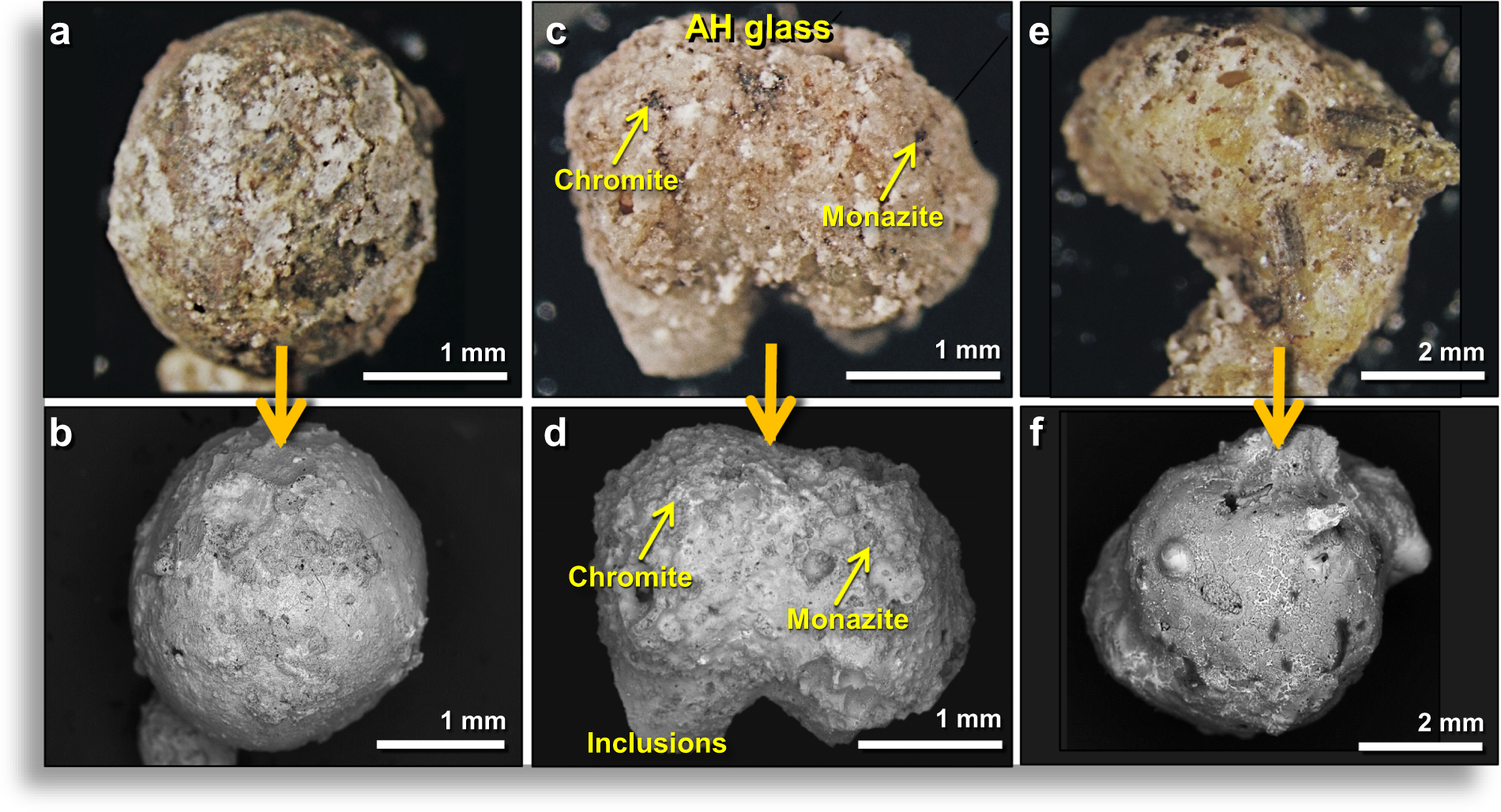
Melt glass from Abu Hureyra: photo
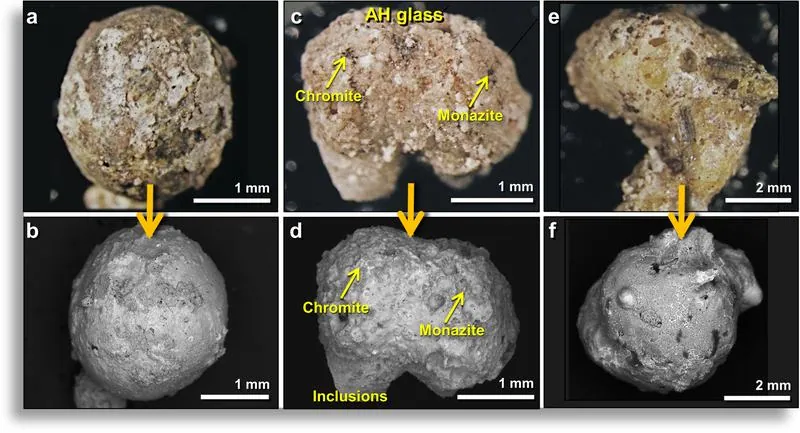
Glass from the site's boundary-age layer, read by its authors as airburst melt; the site itself is now under water.
Moore et al. 2020, figure 2, 2020. CC BY-SA 4.0 (as tagged on Commons; the source figure is CC BY 4.0)
Copies 2
PhotoMoore et al. 2020, figure 2 · commons.wikimedia.org · 2020-03-06 · CC BY-SA 4.0 (as tagged on Commons; the source figure is CC BY 4.0)2 steps from the original

PictureAndrew M. T. Moore and colleagues · commons.wikimedia.org · CC BY-SA 4.0 (as tagged on Commons; the source figure is CC BY 4.0)2 steps from the original
Where it was made
Abu Hureyra, Euphrates valley, Syria (now under Lake Assad) · Archaeological site (flooded)
Sources 1
Cite it
Mysteries Department. (2026). Melt glass from Abu Hureyra [Artifact ART0D51XZRJ482C]. https://mysteriesdept.com/r/ART0D51XZRJ482C
@misc{mysteriesdept_art0d51xzrj482c,
  title     = {Melt glass from Abu Hureyra},
  author    = {{Mysteries Department}},
  year      = {2026},
  note      = {Artifact, catalog key ART0D51XZRJ482C},
  url       = {https://mysteriesdept.com/r/ART0D51XZRJ482C}
}