MethodsTransit timing / observation planningCoverage-based period exclusion and transit-window table for a single observed transit
Method · transit timing / observation planning
Coverage-based period exclusion and transit-window table for a single observed transit
Turn a single transit plus archival coverage into a falsifiable set of dates without using radial velocities, and check published period windows independently.
Questions it answers
Code Python
Runs and results 1 run
Applied to
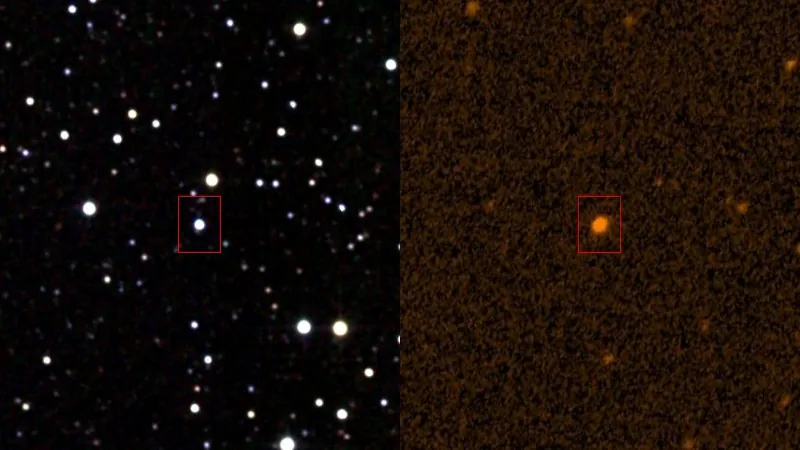
2 datasetsKepler long-cadence light curve of KIC 8462852, Quarters 0-17, as one CSV, TESS light curves of TIC 185336364 (KIC 8462852), Sectors 14-82, as flat CSV
References
- arXiv:2607.20643 (July 2026). Models the symmetric 1.1 per cent dip in TESS Sector 15 (September 2019) as a planetary transit and combines it with archival and new radial velocities: a 2.3-sigma companion of about 9 Jupiter masses and 1.7 Jupiter radii with a period of at least about 1030 days, in several allowed period windows. Independently recovered in this department's TESS search.
- arXiv:2609.02726 (September 2026). A Bayesian recurrence test on the dip families gives a Bayes factor of about 45 for recurrence at a period of 781.6 days with a width of 80 days. A dated, testable claim for the periodic reading.