Archaeological forgery
An object made or altered in modern times and presented as an ancient find, usually by planting it in the ground or in a collection.
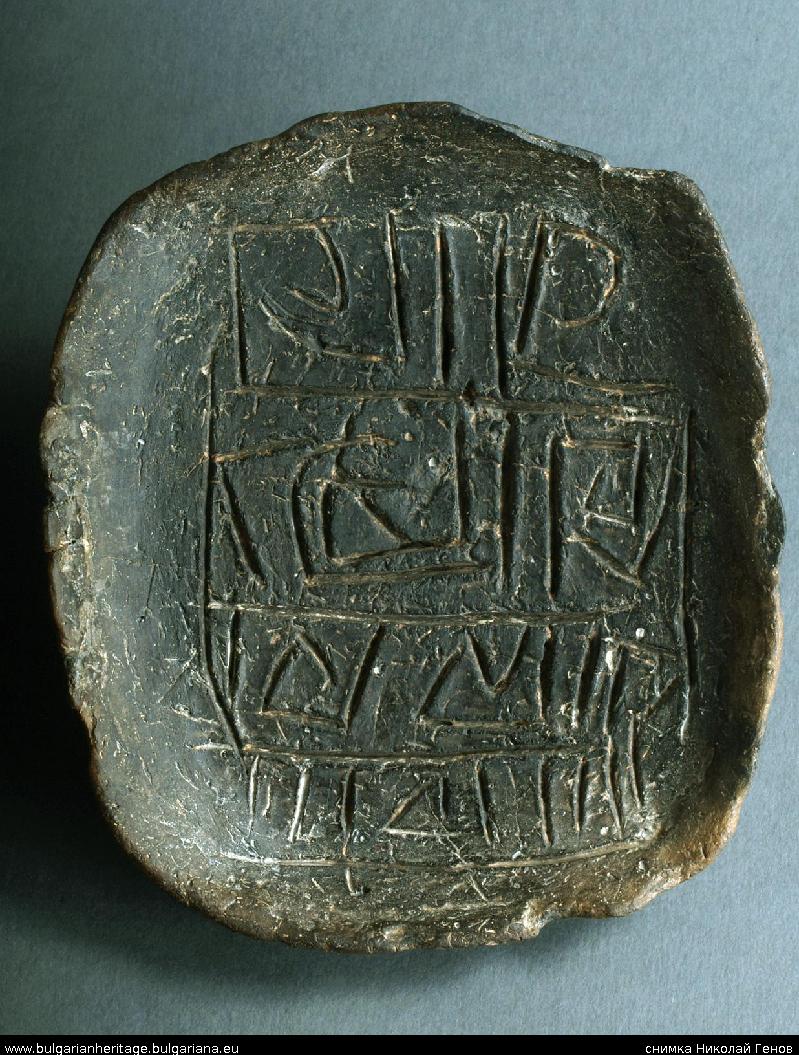 Vinča signs
For this site a forgery is any object whose claimed age or origin was fabricated by a person, whether by making it new, by inscribing or altering an old object, or by placing a genuine object where it was not found. Three kinds of test bear on it. Excavation under control checks whether objects lie in undisturbed soil, with roots and sediment grown around them, or in loose fill; the 1927 Glozel commission relied on this [@boschgimpera1927rapport]. Materials analysis looks for modern inclusions such as dyed fibres, fresh plant matter or coal, and for firing or patina histories that do not fit the claimed age [@barbetti1976archaeomagnetic] [@wikipedia-glozel]. Typology and epigraphy ask whether the forms and signs could have been known to a modern maker from print, and whether new types appear in the finds only after their models were published; Dussaud and Vayson de Pradenne built the Glozel case this way [@dussaud1927inscriptions] [@vayson1927chronologie]. A forgery can sit inside a genuine site, which is why the Glozel state team speaks of a real deposit enlarged by manipulation rather than a simple fake [@daugas1995resume]. The Piltdown skull and the Saitapharnes tiara are the standard comparisons.
Where it comes up
Sources 6
Cite it
Mysteries Department. (2026). Archaeological forgery [Concept CPT0DEDZB86XVEY]. https://mysteriesdept.com/r/CPT0DEDZB86XVEY
@misc{mysteriesdept_cpt0dedzb86xvey,
  title     = {Archaeological forgery},
  author    = {{Mysteries Department}},
  year      = {2026},
  note      = {Concept, catalog key CPT0DEDZB86XVEY},
  url       = {https://mysteriesdept.com/r/CPT0DEDZB86XVEY}
}